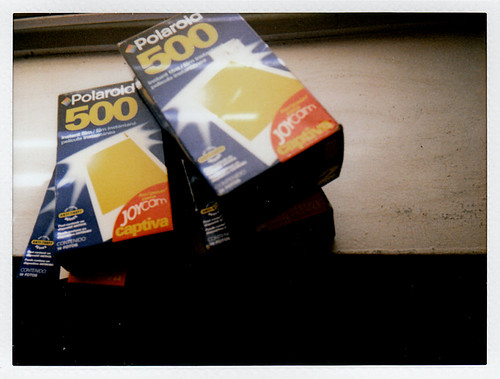
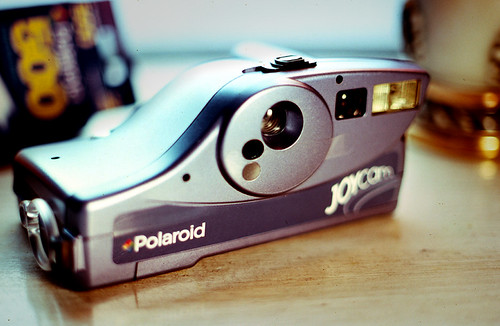
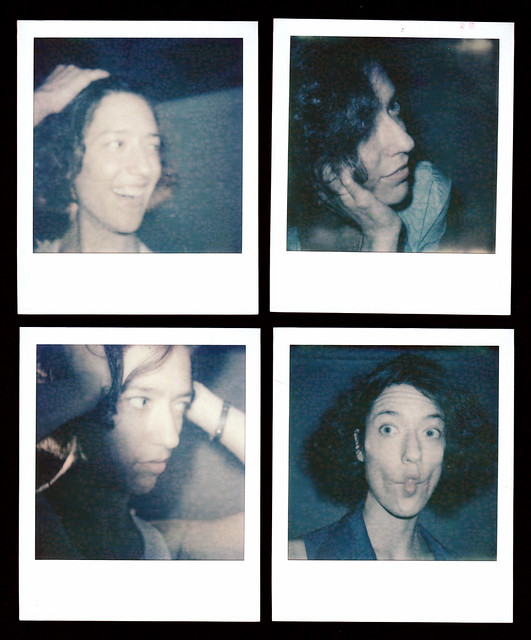
After discovering the defunct Polaroid Type 500 Instant Film format (along with the awesome Polaroid JoyCam & Captiva SLR camera), I tried to acquire Type 500 film, only to find it almost impossible to find.
Impossible…that’s it! If anyone could re-manufacture 500 film, it would be The Impossible Project! After all, these guys have the Polaroid JoyCam on their site. It won’t be long before they make their PX film for Polaroid 500 cameras, right? Right?? Right?!?!?
Sadly, no.
****************************** Michael Raso, Aug 24 21:16 (CEST): Hello Impossible, With the thousands of Polaroid Captiva SLR and Joycam cameras in the world combined with the growing cult around Polaroid 500, will Impossible produce new Type 500 film? -- Best to everyone at TIP, Michael Raso producer / host Film Photography Podcast http://filmphotographypodcast.com/
***** Impossible Customer Service, Aug 25 11:13 (CEST):
hello michael,
Thank you for your email. The type 500 film is an original Polaroid film and will not be reproduced. Sorry, I have no better information for you. kind regards, Andreas Impossible Customer Service
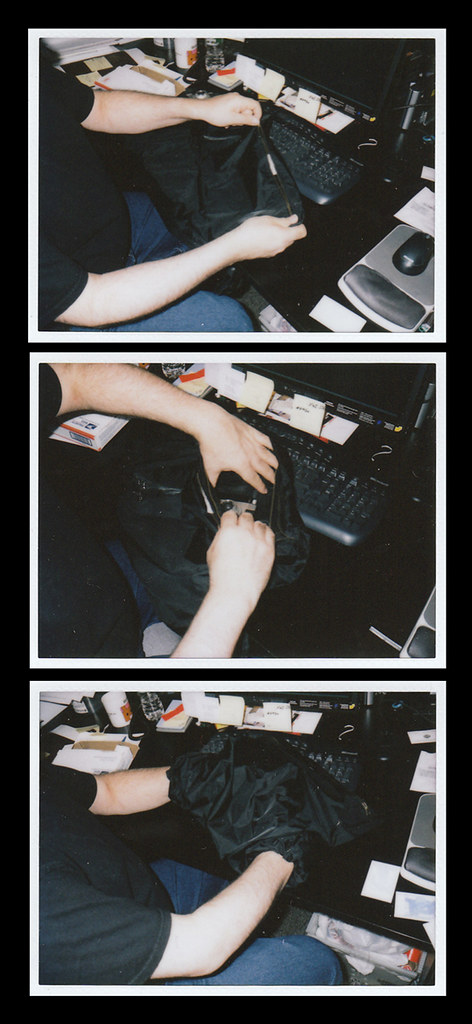
You’re out on the field, and for whatever reason, you decide that you need to develop some film. It’s time to enter the darkroom and fumble about with some chemicals – that is, unless you’ve got a changing bag handy. Google ‘changing bag’ and you’ll probably be invited to test out the latest in diaper changing technology. Search for ‘film changing bag’ and prepare to be amazed by the most useful recent invention for the film developing process.
A changing bag allows a budding film developer to transfer film from canister to developing tank without exposing the film to light. However, the darkroom performs the same function, but with more ‘room to maneuver’, as there is no bag to restrict movement. So, why should you invest in a changing bag when a darkroom is all that is required?
Firstly, changing bags do not require the same level of preparation as a darkroom. A darkroom requires the use of blackout material, ventilation equipment and other expensive items, whilst a small changing bag may be purchased for as little as $13.
Secondly, changing bags allow photographers to develop film ‘on the go’, as well as change over jammed or partially-exposed film without searching for a darkroom or exposing the film to light. Darkrooms are not common in the middle of the Sahara or on the steppes of Mongolia, so photographers inclined to remote expeditions should always have a changing bag on hand.
Finally, I like changing bags because of their portability. I know this sounds suspiciously similar to point number two, but a darkroom can be impractical even in your own house. If you’ve only got one or two sinks, setting up a darkroom with foul-smelling chemicals in your kitchen might not be a good idea. A changing bag is the perfect way around this.
So, next time you’re at your favourite photography store, see if a film changing bag is in stock. If you haven’t already got one, pick one up! You’ll wonder how you ever managed without one.
Julie Spaulding is the owner of How to Develop Film, what she likes to consider the web’s premier source on film developing.
Welcome to the Film Photography Podcast. The podcast about having fun shooting still film photography, learning about vintage film cameras, equipment and techniques!
Kodak discontinued Kodachrome film in 2009. Dwayne's Photo will continue to process til 12/30/2010. Film is still available via e-bay. This is your last chance to shoot this wonderful film.
Filmdev.org - a great site about film-developing recipes.
Digital Work flow discussed
Negs are the best archiving material! Mike takes all his stuff,boxes it once a quarter, and stores it. Mike always digitally stores at least three copies of his work. Keep an off-site copy for ultimate safety.
Film Photography Podcast listener and friend Tony Kwong delivered this sad news to me via e-mail.
Hey Mr Raso
Just to let you know that Fujifilm's FP-100b has indeed stopped production in June 2010 and is discontinued in both sizes (regular and 4x5). Stock still remains in the distribution channels, so they will still be available in some stores. This discontinuation was announced by Fujifilm Japan in September of 2009. There were previous denials printed in the Britsh Journal of Photography of the discontinuation by Fujifilm, UK at the end of 2009. I was able to confirm with the a production head of Fujifilm Japan on that, and it is indeed a production stop. That means it wont be available anywhere as that's the only place that manufactures this film. These denials prove incorrect when US, Japanese and UK Fujifilm distributors were unable to get more film as the last batches of 100b film have been produced and shipped.
The only instant pan packfilm in production is Fuji's FP-3000b series. while the regular size is widely available; the 4x5 version of this film is not "officially" available in too many countries outside Japan. I was speaking to a variety of Fujifilm, USA sources for a few weeks on this matter and they stated to me a few days ago their intention to start importing FP-3000b in a 4x5 format. Recent contacts with Fujifilm, UK reps stated they are also interested in importing the FP-3000b film in 4x5 size. Black and white instant packfilm is not dead, but ISO 100 FP-100b definitely is.
The Olympus Stylus Epic (also known as the Mju-II) is my “point and shoot” camera of choice that I never leave home without!
Photographer Jim Tardio summed it up best: “Most serious photographers like to carry a small pocket camera with them at all times. For those of us raised on 35mm film, the Olympus Stylus Epic (called the Mju-II outside the USA) is our camera of choice. For those of you who don't know what this camera is, it is an inexpensive point & shoot. It just happens to have a sharp-as-a-tack 35/2.8 lens permanently attached, a provision for spot metering (which I never use), and it fits in your pocket without leaving a bulge.”
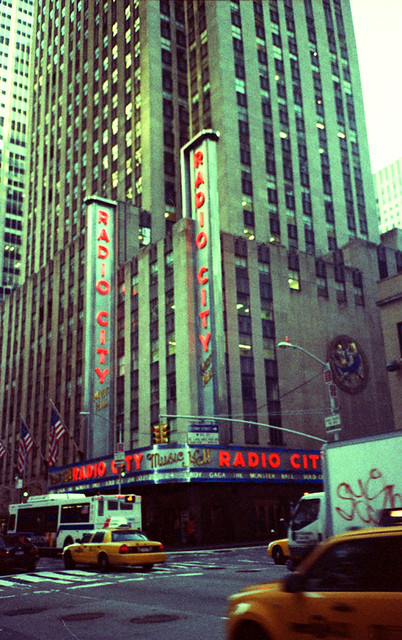
above: Radio City Music Hall, NYC / Agfa Chrome 100RS and cross-processed the film in C-41 chemistry giving the image its unusual color cast.
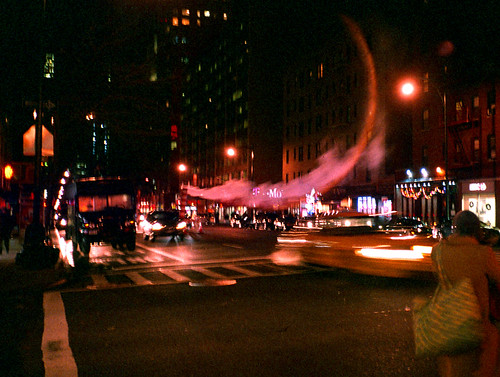
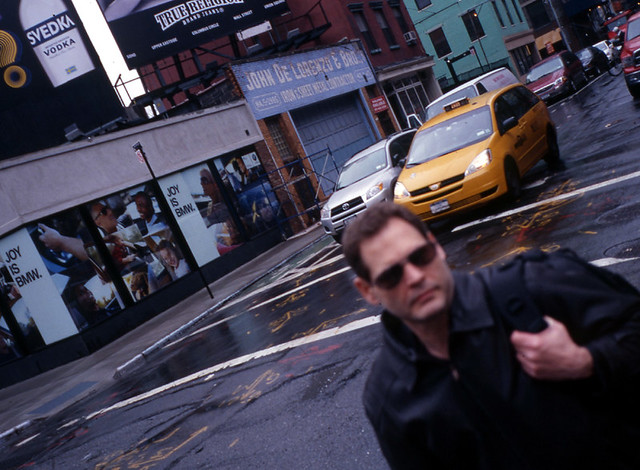
The Stylus Epic has a great “night flash” feature that keeps the shutter open after the flash fires, which makes for some unusual night shots. Above: Winter night in NYC. Below: Pink Delicates “ham it up” on Hofbrau night.
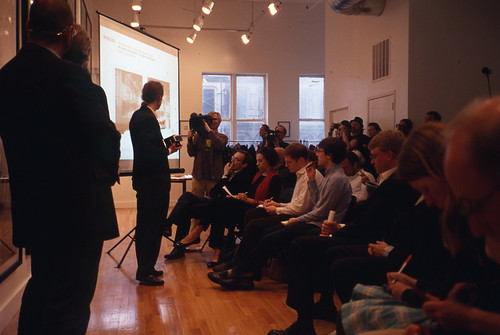
The perfect camera to always have in your pocket! The Stylus Epic came in handy to document The Impossible Project press conference (above) this past March in NYC.
Above: Perfect as a “behind-the-scenes” camera during a photo shoot since the internal flash can be turned off. During my “Girls and Corpses” magazine shoot above, this “Crossed Processed” Stylus Epic shot was better than my 120 shot of the same subject.
Exteriors with the Olympus Stylus Epic are...epic!
Méla Nichols is a 24 year old stand-up comic, actress and writer living in New York City. She's currently appearing on the ShowTime series “I can't believe I'm still single.” She enjoys all things off-beat and vehemently marches against the grain on a daily basis.
That’s the bio that appears on my Flicker page featuring all of the portraits-to-date that I’ve shot of this amazing new talent.
I met Méla for the very first time the very same day I shot her portraits. It can be tough to shoot a portrait of someone you don’t know or never have met. Méla's laid-back attitude and awesome nature made the session feel like I 've known her forever.
Méla has been acting in low-budget indie films and recently started doing stand-up comedy.
Upon meeting, I was impressed with her tenacity and energy. I love the Mark Twain quote Méla recently posted on her FaceBook page:
”Keep away from people who try to belittle your ambitions. Small people always do that, but the really great make you feel that you, too, can become great.” -Mark Twain
Méla is featured in Season 2 of the ShowTime series “I Can’t Believe That I’m Still Single” (trailer below)
You can see Méla Nichols perform her stand up act on the following dates:
Thursday, August 26th 9:30pm COMIX New Talent Show 353 W 14th Street New York, NY 212 524-2500 (box office)
Tickets are $10. reserved ($15. at door) - Two drink minimum.
Mela says: “This show is gonna be awesome because it's a one hour interactive improv show about dating, love and relationships, and specifically for this one the theme is the keys to chemistry, how to tell if someone likes you or not. After the show there is a party and an opportunity to register into a weekend seminar about love and relationships where participants learn different dating habits and what gets in the way of them finding love and sustaining it, etc Also there will be tons of very valuable relationship and love coaching.”
And that’s not all!
September 22, 9pm New York Comedy Club 241 East 24th Street between 2nd and 3rd New York, NY
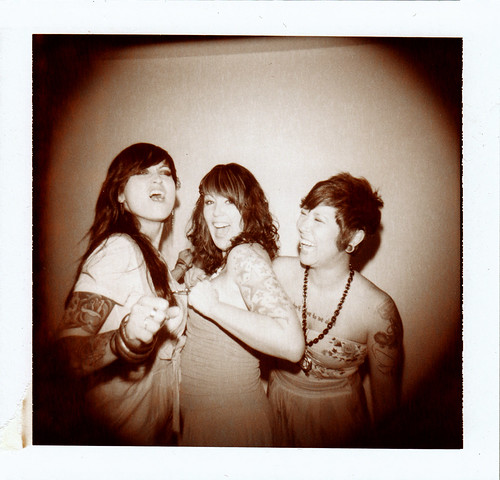
“How did you get the vignetting? Is that intentional i.e. by lighting technique?”
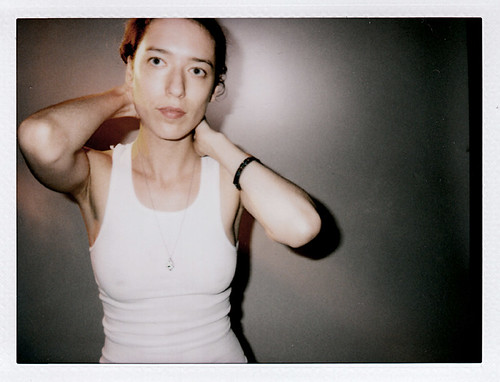
The image of New Jersey band Monday Night Bear Claw was shot in my studio using the Holga 120N camera with a Polaroid back. I used “hot lights” combined with a Holga on-camera flash.
There is a 650w "spotted" light (w/ barn doors) aimed onto white seamless paper behind the talent. This causes the circular "hot spot" directly behind them. Most of the vignetting occurs due to characteristics of the Holga camera.
Most of my photography is a combination of technique, esthetic and personal style. Here are some examples of recent images with a few notes on how the images were accomplished.
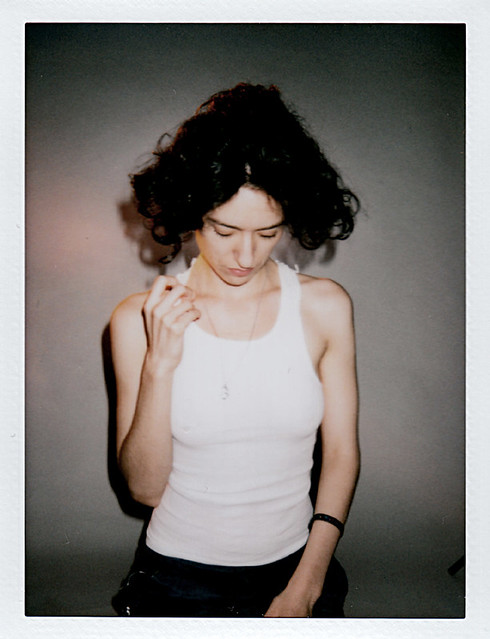
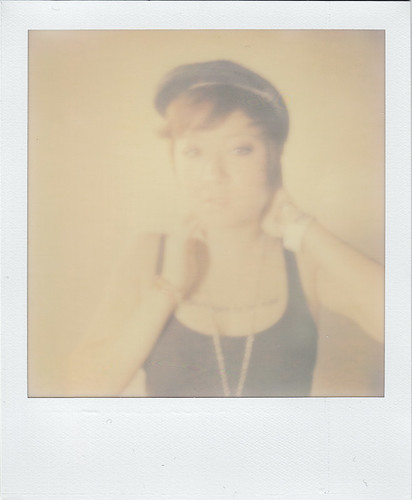
Above: This dreamy portrait of Ashley from Monday Night Bear Claw was lit using the same techniques as the Holga portrait above. In most situations, a mood can be accomplished by your choice of camera, lens and film stock. In the above shot, I used my 1972 Polaroid Alpha camera with the brand new Impossible Project PX 70 Color Shade instant film.
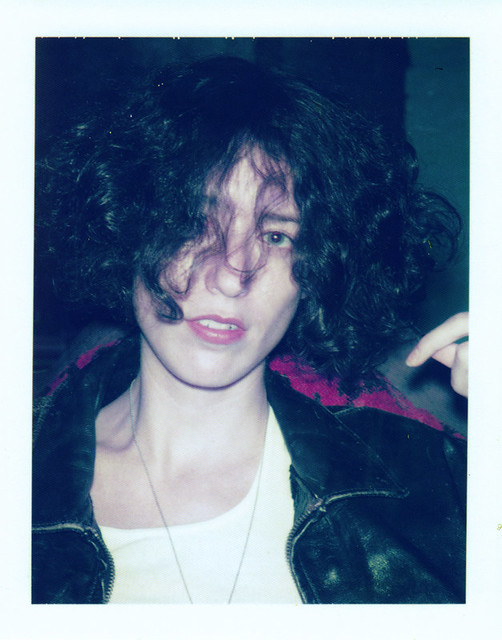
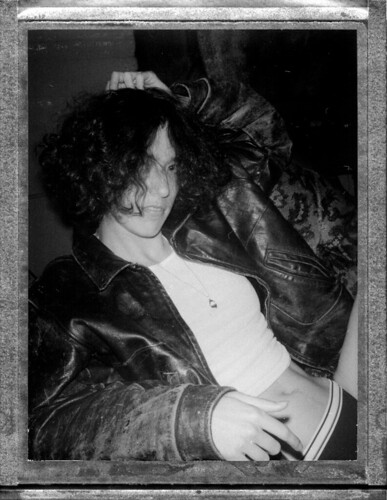
Below: I continued to shoot Comedian Méla Nichols between set-ups at my studio. Many times, my best images are those shot “in-between” poses. For this reason, I always have some type of point-and-shoot camera handy before, during and after a studio shoot. The image was captured using my 1969 Polaroid Colorpack II camera, Polaroid B&W instant film and an on-camera flashcube.
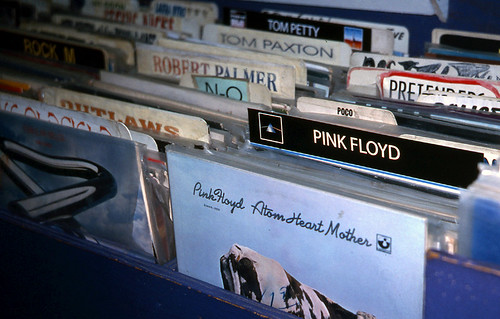
Above: Flip Side Records in Pompton Lakes, New Jersey. “Atom Heart Mother” album shot with the Olympus Trip 35 camera. The slightly spotted lighting effect is due to using a flash with the Trip’s slightly-wide fixed 40mm lens.
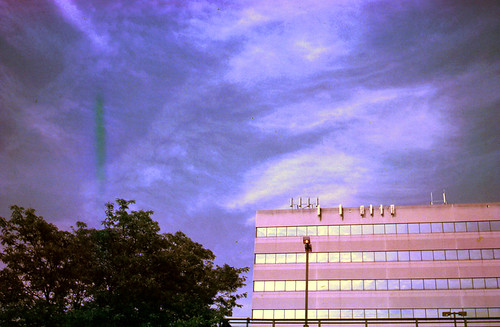
Below: Want a shot to look like it was shot in the 1970s? Easy enough…shoot with film that expired in the 1970s! This shot of Willowbrook Mall in Wayne, New Jersey was shot using Kodak Kodachrome film that expired in March of 1979. Years of poor storage caused the dyes in the film to shift towards magenta, giving the shot the off-beat faded look.
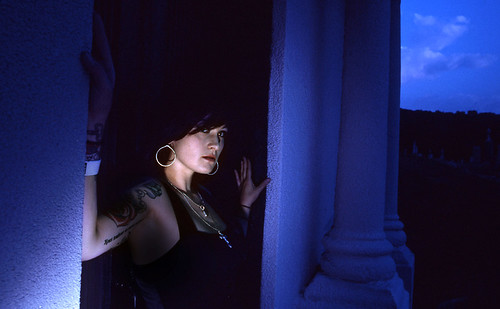
Above: Day for Night can be achieved by shooting with Tungsten balanced film. Tungsten film is meant to be shot with studio lights. Studio lights are much “Warmer” than daylight, so any images exposed using daylight will render your shots blue. In order to make sure that model Desiree Saetia wasn’t blue, I used an off-camera flash with a tungsten gel.